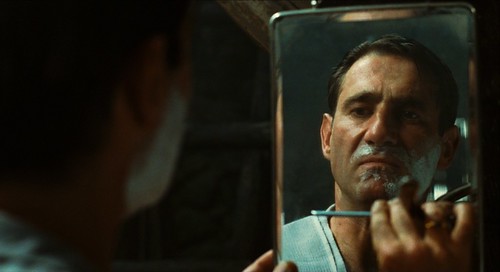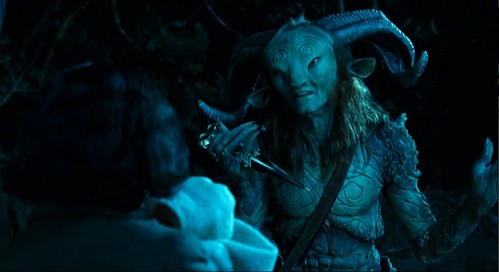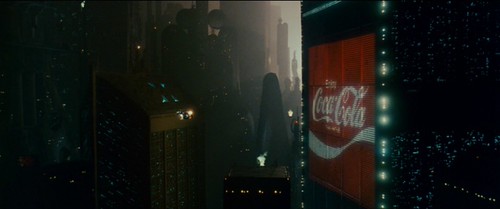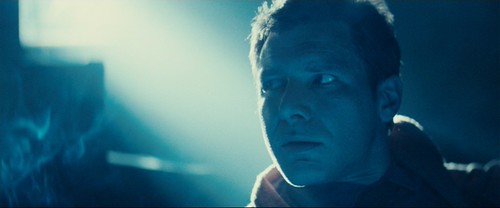
Showing posts with label review. Show all posts

Monday, June 14, 2010

Decalogue IV (1988)

Director: Krzysztof Kieslowski
Screenplay: Krzysztof Kieslowski and Krzysztof Piesiewicz
Starring: Janusz Gajos and Adrianna Biedrynska

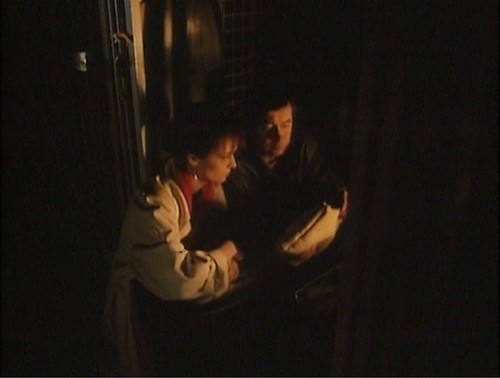
Images from 2003 Facets release of The Decalogue.

decalogue iv 2

Pauline Kael—who I’m apparently apt to quote—said that we shouldn’t view movies in a vacuum. When we see a movie, we should bring all our experiences and everything we’ve seen, read, or heard into the theater. The way we perceive one movie can inform us of how or why another one works so well, just as drawing on our own experiences can. I’ve been kind of slow to write about Decalogue IV, but I think I’m finally ready to do it, in part because of a short story I read by Raymond Carver. The story is “Will You Please Be Quiet, Please?” from the collection Short Cuts.

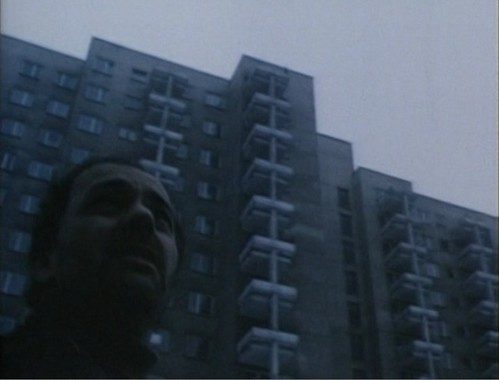
So what on earth does an American short story with no religious connotations have to do with a Polish television series based on the Ten Commandments? For me, a lot. What fascinates me about Decalogue IV is not its connection to the 4th Commandment so much as its depiction of a relationship changed by discovery. It’s not preaching or attacking the 4th Commandment, nor is it bringing it to the forefront. Rather, the Commandment can be considered in the context of the story; it can be considered in the drama and the situation the characters are in. This is one of the series’ greatest strengths; the Commandments are hardly depicted literally and the whole point of the movies isn’t reduced to some contrived fable tied down to them. Decalogue is about the people that populate its narrative, in a way that is not at all dissimilar to Short Cuts.

In “Will You Please Be Quiet, Please?” we see a happily married couple dredge up an incident three years ago where the husband, Ralph, suspected the wife, Marian, of cheating on him at a party one night. While Ralph has always inferred there was an affair, he has never known for sure. The doubt that existed was insular, and effectively buried the incident under a veneer of tranquility. But that peace is more a prison than anything else; a stasis that traps Ralph and Marian in a quiet frustration that is itching to bubble to the surface. Their situation is like a family of a missing person who is suspected to be dead but is never found. This eats at the mind, to the point that you’ll do anything to discover—or reveal—the truth.

In Ralph and Marian’s case, either their lack or harboring of the truth provides the impetus for catharsis; they need some way of releasing their frustrations. The great thing about Carver’s story is that it doesn’t offer some pat conclusion to such a weighty dilemma, because any such solution would invariably feel contrived and simplistic. The story simply marks the crossroads that countless people have found themselves at throughout their lives. Carver suggests such a catharsis can be therapeutic, but doesn’t endorse it as some kind of magic solution. This is all conveyed subtlely, through actions that are realistic, not melodramatic:

“He tensed at her fingers, and then he let go a little. It was easier to let go a little.”

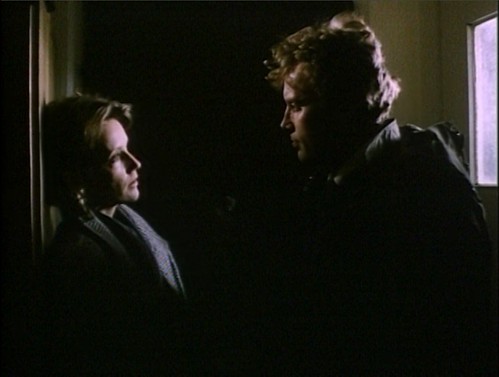
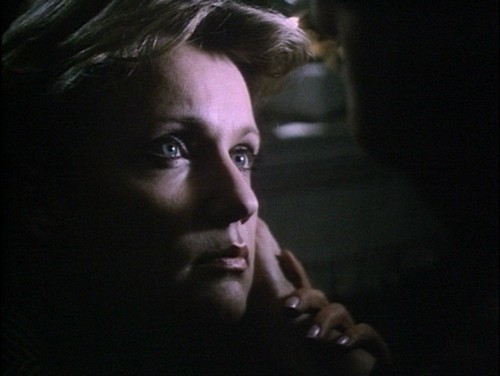
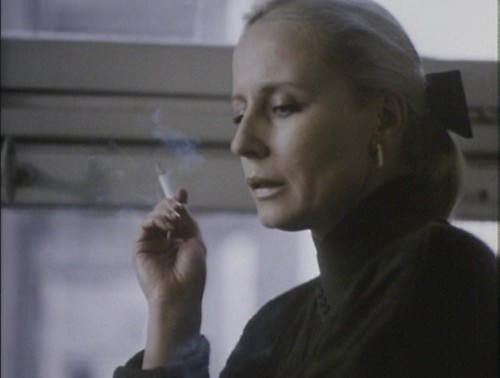
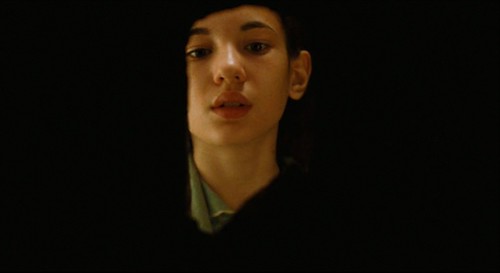
“Will You Please Be Quiet, Please?” carries a strong similarity to Decalogue IV, not only in content—uncovering a secret that has been waiting to be discovered—but in the catharsis a discovery produces. Decalogue IV, too, has a secret that’s been harbored by the father, Michal, from his daughter, Anka. This secret is in the form of a letter Anka’s mother wrote shortly before she died. Michal keeps this letter in an envelope marked “To be opened after my death.” Anka knows of this letter and when Michal goes on a business trip and leaves it behind, she decides to open it.

She finds a secluded spot by a lake and carefully cuts the envelope open with scissors, only to discover another envelope inside marked “To my daughter, Anka.” As she’s about to open it, a man walks near her carrying a canoe over his head. The man causes her to reconsider and it is here that we find the movie at its most poetic and conscious of its religious theme. It is such a classically Kieslowskian moment, to have a complete stranger inadvertently give Anka pause. Who this man is and what he thinks hardly matters, and while it’s possible to see him as some sort of surrogate God judging her, such an interpretation is beside the point.

What matters is the moment provides a break that causes Anka to reevaluate her actions. Whether or not she’s considering the 4th Commandment, she refrains out of respect and love for her father. As soon as she opens the first envelope, she can tell her father didn’t write the second; how could she if the writing is clearly different? “To my daughter, Anka” must’ve been written by her mother. Like Ralph in “Will You Please Be Quiet, Please?,” Anka can pretty much guess at the letter’s contents. We know that Anka is no idiot anyway—her physical examiner tests both her eyesight and intelligence by spelling “father” in English with the eye chart letters and, not being able to see well, Anka guesses the smallest letters. But rather than simply affirm her suspicions by reading her mother’s letter, she instead forges another in her mother’s hand, using this one to confront Michal.

I don’t think trying to explain why she chose this route is the best use of our time, simply because she becomes a psychiatric case study for us to scrutinize. Our explanation might make sense, just as the psychiatrist’s does at the end of Psycho, but it too will invariably come across as sobering, contrived, and silly. Robert Altman writes of Raymond Carver:

“[…] what he really did was capture the wonderful idiosyncrasies of human behavior, the idiosyncrasies that exist amid the randomness of life’s experiences.”

You could say the same thing of Kieslowski. His movies, so often filled with random or tangential moments, flow with the spontaneity and artistic license we associate more with music than with movies. These moments are almost never rationalized and why should they be? Not only should movies allow the audience to suspend their disbelief, but irrationality is something that informs the human experience. We always seem to try and explain why every single thing happens in movies and criticize the irrational, but maybe we ought to take a look at ourselves first. No doubt we’ve done countless oddball actions that we fail to rationalize. Every little action in a movie, too, needn’t be examined with a fine tooth comb.

What is important and what should be discussed is the cathartic ramifications of Anka and Michal’s actions. For Michal, he’s been harboring this letter for years and years and while he doesn’t know the contents, he can pretty much infer that he’s not Anka’s biological father. Michal is informed by dialogue like “I don’t know.” He’s plagued by uncertainty, and his plans to give Anka the letter failed to pan out; she was either too young or too old. Yet the urge to reveal whatever is in the letter—and be honest with his daughter—finally causes him to leave the letter for her to open. He is a dam, overburdened with secrets and yearning to burst in catharsis.

His passive method of basically baiting Anka with the letter reveals the fear and anxiety he has with confrontation. Anka says: “You want things to happen without being involved.” Indeed, this is true of many of us. Reality is often too frightening to face, so we instead hide behind letters, email, texting, phone calls; sometimes we’ll simply bury ourselves, taking refuge in a book, games, or a movie in hopes that what we’ve done will take care of itself. But we can’t shun reality, and our vacillations and refuges only exacerbate the problem. “Out of sight, out of mind” only makes sense in the moment, and doesn’t provide us with any lasting comfort; it is only a temporary reprieve.

Both Anka and Michal are living a lie by not discussing what they know to be true. Their conversation reveals the change in their relationship; it’s no longer as simple as the father-daughter dyad. The complexity is that Michal sees Anka not just as a daughter but as a woman as well. She sees him not simply as a father but as a man. He does feel jealousy when she sleeps with men and she does feel unfaithful. It’s hard to say whether they’ve always felt that way or whether they are simply reinterpreting their feelings in the context of discovering the truth. For me, it's the latter; our interpretation of feelings isn't concrete and something like jealousy can be transmuted from something more universal like the need to protect. After all, fathers are bound to be protective of their daughters; it’s just the way things are. Michal could simply be considering that paternal instinct in light of discovering he's not Anka's father.

Confrontation is neither destruction nor reparation; it’s a precursor for either one. When Anka discovers Michal doesn’t merely think of her as a daughter, she undresses and offers to sleep with him. It’s such a raw and vulnerable scene, one that she does out of frustration; we almost hold our breath at such a tense moment, knowing that one action could be irreversibly damaging to their relationship. Michal values that too much, however, choosing to paternally cover and embrace her. Such moments are extremely risky, but Kieslowski pulls it off beautifully, in part because he never loses sight of the character’s humanity. The morning after, Anka wakes in panic, unable to find Michal and thinking he’s left for good. He hasn’t, and she sees him walking outside to get milk. Such a simplistic, everyday act tells us that reparations have already begun.

I’ve never regretted seeing a Kieslowski movie. The great thing about him is that, for all the intense emotional situations he creates, he’s never made an excessively bleak or exploitative picture *cough* White Ribbon *cough* Antichrist *cough*. He offers us hope in the face of tribulations that never lose their realistic weight. It’s a tight-wire balance that countless movies have fallen off of and in doing so, they’ve lost their dramatic relevance. The Decalogue is a wholly unique and special work precisely because it doesn’t force feed us an agenda. Rather, its themes are integrated in the realism of the story and the characters, who aren’t even characters so much as real people facing problems like anyone else.
decalogue IV

Wednesday, May 19, 2010

Decalogue III (1988)


Director: Krzysztof Kieslowski
Screenplay: Krzysztof Kieslowski and Krzysztof Piesiewicz
Starring: Daniel Olbrychski, Maria Pakulnis, and Joanna Szczepowska


Images from 2003 Facets release of The Decalogue.


decalogue III 1

On Christmas Eve, the air is charged with a sanctified air; the feeling that the day will be perfect and holy, or at least, the feeling that it ought to go that way. It's kind of like church: a special time and place where you stay indoors, spend time with your family, and avoid impure thoughts or actions. But the idea of the Sabbath—whether it be Saturdays, Sundays, Christmas, or Easter—is a human construct subject to human compulsions.

The sanctity of the day (or the place) is only as strong as we're willing to make it. In and of itself, it has no meaning. Decalogue III hardly endorses a strict interpretation of keeping the Sabbath holy. If anything, having Janusz spend Christmas Eve and Morning with his former lover Ewa proves more cathartic and redemptive than sinful. In this sense, it's iconoclastic of the 3rd Commandment.


By iconoclasm, I don't mean the Byzantine kind; Decalogue III's iconoclasm is more progressive than that. The old kind was where religious images were banned because they were an inaccurate representation of Christ; things like paintings or sculptures desecrated Christ's true image because they could only show his human likeness—any depiction of his divinity being impossible in a physical medium. The argument behind Byzantine iconoclasm was that depictions of a physical Christ were forms of pagan idol-worship. That is, the symbol itself was being worshipped and not what it represented or implied.


The problem with Byzantine iconoclasm is that it enforces a dogma that restricts our freedom of interpretation; forcing us into a singular way of understanding and respecting Christ's sacrifice. It grants no latitude for other sects and denies tolerance. This leads to another form of idol worship; the metaphysical image of Christ being such a holy one that it cannot even be represented physically, much less questioned. Any questioning or defiance of the decree is viewed as an act of blasphemy, and there is no leeway in understanding the offender's motivations or situation.


The rule being enforced—that Christ's image is so sacred as to be impossible to depict physically—is not unlike a strict adherence to the Commandments themselves. Such an interpretation—one that denies any good coming from defying the Commandments—forgoes one of Christ's most important teachings: forgiveness. Forgiveness, in my mind, is necessarily preceded by empathy and tolerance. Without these, how can we hope to forgive someone's actions? We may say we forgive them, but for us to mean it, isn't it necessary that we understand their feelings and motivations?


The Commandments can't be treated as the immovable object. We can't say: "uh-oh, you didn't keep the Sabbath holy. Blasphemy!" because it simplifies the human condition; it denies any possibility for exception even though we know the world can't simply be divided into good and evil—it's a big gray area. It is human to err. We must be willing to forgive mistakes and moreover, understand and empathize with them. This is where Decalogue III works so well: in subverting our preconception that Christmas Eve ought to be holy—that any defiance of this is sacrilege.


decalogue III 2


In the beginning, Janusz feels that no good can come from spending all Christmas Eve with Ewa, his ex-lover. We, too, aren't exactly sure what game Ewa is playing. She tells Janusz that her husband has gone missing and she needs help looking for him—on Christmas Eve of all days. She parks the car herself in the median but says her husband must have abandoned it. Then she calls the hospital to report her husband had been injured on the street, even though she hasn't even seen him. She does these things to string Janusz along; she's throwing a false trail of bread crumbs to keep him with her all night.


Her motives are unclear for us until the end, in part because, like Janusz, she's stringing the audience along as well. She must be lonely though, we at least know that much; her only family is a senile aunt at a retirement home. Her aunt kindly asks her about her homework and Ewa obliges—it's obvious this has become a routine by the way Ewa tries to keep a smile. This is a smile done out of courtesy, not happiness. It's a small comfort when your only family member doesn't even know your age and for Ewa, it's a slippery slope trying to keep face; her inability to maintain a smile is a dead giveaway.


decalogue III 5


Her motives are almost understandable. Her only contact with family is this rather pitiful scene with her aunt; a few minutes of humoring an old woman who doesn't even know her age. She loves her aunt—that's painstakingly clear—but it's a small consolation. Part of her is thinking: Gee, thanks [God]. I get to wake up my auntie for a few minutes on Christmas Eve only to have her fall asleep again in the middle of our "conversation." We also see Ewa stopped at a red light; she is looking at a father and son playing in the snow. Images like these are not insisted upon, but they hint at a loneliness and stasis, and make Ewa's rather bizarre, attention monger-ish behavior almost justifiable.


Janusz probably doesn't even understand Ewa's loneliness at first. Having seen Ewa eye him earlier at Mass, he knows something is up. Later, he unplugs the doorbell, hoping to avoid any surprise visits from Ewa. But she calls anyway, with Janusz apprehensive about answering the phone. He knows what awaits—or rather, he thinks he does—but goes along anyway because he wants to avoid conflict with his wife. His wife holds a similar restraint; aware that Ewa is probably calling, with the camera training on her, she stops at a distance because she isn't the contentious type.


There's a fear in her eyes; it's as if she too, knows the outcome but is incapable of stopping it. She's probably confronted Janusz before about his affair, but tonight, she can't bring herself to conflict. It could be because it's Christmas Eve and she's too surprised to act, or it might be that she's willing to let tonight's events take their course. It is the latter possibility that I find more enriching and humanist; she trusts her husband to make the right choice. As it turns out, this night will prove beneficial for everyone; providing Janusz and his wife with closure and Ewa with catharsis.


It is only when Ewa reveals her situation that her bizarre actions not only become identifiable, but more importantly, something we can empathize with. The night has been strange—almost like a mini-Eyes Wide Shut—ranging from Ewa manufacturing false clues to her husband's whereabouts, the two going to the morgue and wondering who is rejoicing the death of the man before them, Janusz fighting the sadistic guard, Ewa's suicidal attempts to drive them off the road, and the parking lot attendant skateboarding down the ramp.


decalogue III 3


It is at that parking lot that Janusz finally learns that Ewa's husband left her three years ago. For her, this has hardly been fair. They both were caught in the affair, but he gets to happily spend Christmas Eve with his wife and kids while she sits alone in her apartment. Her goal is to spend the entire night with Janusz and by the end, make him understand and empathize with her feelings. She says it's kind of like a game; she feels that if she can get through the night with Janusz, she'll be able to move on. While we may raise our eyebrows, is her superstition any stranger than our obsession with holidays or the Sabbath? If this is the way she finds closure, shouldn't we grant her that small allowance? Janusz's breaking of the 3rd Commandment effectively saves a life; Ewa drops her suicide pill, no longer needing it.


Decalogue III subverts the rigidity of the 3rd Commandment, claiming that we can't deal in absolutes. If someone needs us, then what value does the commandment have? It doesn't make sense to ignore the person standing next to you just because it's Christmas Eve. But that isn't to say the Sabbath is bad either; it, like Ewa's superstitious game, helps ground us and even proves cleansing and cathartic. In the end, Janusz and his wife achieve their closure through a simple, knowing exchange:


"Ewa?"
"Ewa."


decalogue III 4

Thursday, May 13, 2010

Decalogue II (1988)

Director: Krzysztof Kieslowski
Screenplay: Krzysztof Kieslowski and Krzysztof Piesiewicz
Starring:Krystyna Janda and Aleksander Bardini

Images from the 2003 Facets release of The Decalogue.

decalogue ii 1

After seeing things like Juno and 4 Months, 3 Weeks, 2 Days, it's a relief to see Decalogue II, which is so refreshingly apolitical. Juno and 4 Months bring abortion to the forefront; losing their dramatic integrity in the issue itself and in the case of Juno, the added distraction of making the characters insufferably hyper-hip. Decalogue II is such a raw, naked, and honest piece of filmmaking by comparison. It's not about the scandal of pregnancy from an affair while your husband is on his deathbed; it's about the individuals involved in this drama; their reactions and frustrations with the situation rather than the situation itself. The movie never loses sight of that.

This isn't to say Decalogue II denies of the significance of abortion as a moral issue; it's just beside the point. Sure, there's the Polish Catholic milieu to consider, but our focus in Decalogue II is on the people that populate the story. It is their fears, uncertainties, and frustrations that are so compelling because we identify with their humanity; with their moral and existential quandary. Dorota's choices carry with them such intense ramifications that to act prematurely would be devastating, should her choice be the wrong one. Abort her baby and hope her husband lives? Or keep the baby under the impression her husband will die?

Such a choice might be easier if she knew the outcome. Might be. But she doesn't, and therein lies the frustration: uncertainty. It is human to desire knowledge; to desire control; to be able to make a rational decision. It's funny how easily we can trick ourselves into thinking that everything is answerable; that somewhere out there, there is some expert or wise man who can tell us exactly what to do. For Dorota, this is the doctor. She urgently pursues him; hopeful he'll give her the answer she wants, which would be any answer other than the one he gives: he doesn't know.

Krystyna Janda is good in this role. Her face pale and gaunt, she's a woman worn down by waiting. There's an undercurrent of anger in her face, as if her own stasis has started to freeze over her ability to react. When the doctor tells her he really doesn't know what Andrzej's outcome will be, her face gives the slightest ripple of emotion. Janda's acting is the antithesis of melodrama. Like her performance in Tatarak, she is an actress of subdued expression; willing to play characters who cut close to reality and achieve a naked rawness that's genuine and beautiful.

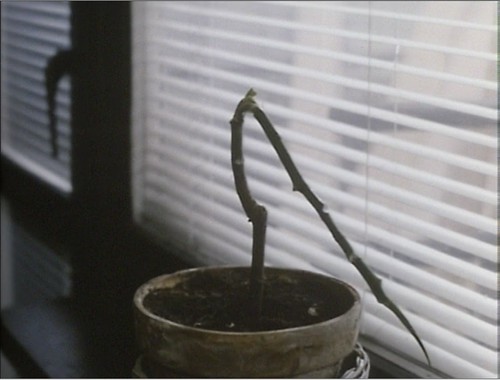
Indeed, Janda is at once weathered and strikingly beautiful; still showing lingering vestiges of vibrance and youth in her middle-aged years. Her pregnancy is a powerful reminder of her waning years of fertility. Those years are a time bomb; counting down to Dorota's own destruction through inevitable infecundity. Things are changing around her and within her, and she yearns for control; eventually tearing the leaves off her house plant. A reminder of the relentless, plodding pace of time itself, the gesture is a helpless grasp for control; a silent outcry to stop the unstoppable. Classically Kieslowski-an, she bends the naked plant stem but it defiantly opposes her action; slowly raising itself as if to affirm the incessant beating of time.

decalogue ii 2

The paradox is that as unbearable as stasis is, the alternative is a far more frightening prospect to face. Her prison becomes a refuge from the truth and reality of the situation. When she plays tapes of music, it's an attempt to escape from the burdens and consequences of action. Yet, like any escape from reality, it offers only a temporary reprieve. Decisions, death, and conclusions must be faced. Such a statement seems unbearably pessimistic and brooding, but it's not nihilism. Acknowledging chaos and uncertainty does not mean renouncing order, but rejecting an illusion.

As Myrtle Gordon from Opening Night said, what the story needs is: hope. Hope isn't wish-fulfillment. That's an important distinction to make. Wish-fulfillment tells us everything will turn out fine while making us forget harsh realities. Hope is the possibility of good outcomes in the face of trying times. Decalogue II doesn't package a cute, naive, hunky-dory conclusion because life doesn't work that way. The problem with something like Slumdog Millionaire is that it gives reality only a fleeting glance; like the person who claims they're "aware" because they've given the world news a skim. This is wish-fulfillment; a way to appease a person's guilt because they've been ignorant, but to do it in a half-assed, comforting, innocuous, politically correct way.

But at the end of the day, we needn't compare Decalogue II to inferior pictures to appreciate how beautiful a work this 50 minute movie is. Simply, to offer us hope while not diminishing reality is a rare feat. It is something to be cherished and reflected upon; a rumination on our existential woes and our inherent drive for certainty and knowledge. This frustration we have with the unknown is perpetually with us; an unrelenting reminder of our limitations as human beings. It's possible that the wonderful life we're always trying to reach---the one we keep prattling on about and filling our dreams with---will never come. We may never make it to the big time; forever working that deadend 9-5 job, but to shun reality entirely is to forgo even a chance for lasting happiness.

Saturday, April 24, 2010

Au Revoir les Enfants (1987)

Director and Screenplay: Louis Malle
Starring: Gaspard Manesse and Raphaël Fejtö

Images from 2006 Criterion release.

au revoir

The difference between narrative and plot is such an important one that it's frustrating to see movies stress the latter at the expense of the former. Plot hardly guarantees a compelling narrative, and too often, the feel of the story is lost in the mechanics. How refreshing then, to see Au Revoir les Enfants again; a movie that tells its story through character and atmosphere, not plot. Rather than create melodrama, Au Revoir builds understanding through loosely connected vignettes shot from the wide-eyed innocence of a schoolboy. A very naturalistic way of storytelling, this method develops characters as we would actually get to know them. Movies too often give us shallow fantasies with simplified, yet attractive caricatures; slices of wish-fulfillment that have little bearing to reality. In truth, we rarely get acquainted with people through a singular plot of connected events, but through random, loosely connected encounters. Thus, it makes sense that Au Revoir gives us such a strong understanding and feel for its characters. This is a movie that makes the apparatus of movies disappear; pulling us into a specific time and place and a hardened reality.

It is the characterization that makes
Au Revoir so compelling. The schoolboys are self-absorbed; not yet capable of comprehending the bigotry and violence of the period (and to an extent, can we?). To them, an air raid doesn't inspire fear, but is rather a welcome reprieve from the stuffiness of the classroom. When they shelter themselves in the cellar, Jean Bonnet asks Julien for some light, but Julien refuses, burying himself still further in his book. There is little self-sacrifice or altruism to be had, and among the children, there is none. This isn't in itself blameworthy, but a natural tendency in our adolescent years. It is but one facet of the human condition. Even Jean, who is more awake to the dangers Jews must face, doesn't act with the responsibility of an adult. To imbue him completely with solemn-faced maturity would be to deny him any semblance of humanity. This humanity rings true when, during an air raid, Jean and Julien ditch the safety of the cellar to play jazz duets on the piano.

Such a moment is so easily exploited for melodrama that it is a relief when it passes inconsequentially. Instead of having the priests reprimand Jean and Julien, the film quietly cuts to the next scene. There are many moments like this in
Au Revoir; where the action can be pushed into melodramatic confrontation. Such handling of these situations would destroy the evocative sense the movie brings. This is a picture set in the past, and is more of a recalling of events long gone than an immediate, cohesive, in-your-face plot progression. Which isn't to say that plot is irrelevant; just that it's not insisted upon.

For me, the implications of plot come in hindsight long after the movie has ended. Only much later did I realize the magnitude of Julien's actions, for instance. By participating in the black market, he helped encourage Joseph to steal from the kitchen. Father Pere Jean fires Joseph but simply gives Julien and the other black market conspirators a slap on the wrist. Joseph then collaborates with the Gestapo officers, who take away Jean Bonnet and two other Jews Father Pere Jean was harboring. Joseph, too, is looking out for his own self-interest; uneasily limping in his brand new Gestapo-bought trenchcoat and accusing Julien of piety.

This way of handling its material is precisely what make Au Revoir such a strongly subjective experience. By understating events, the movie channels Julien's own train of thought. His evocation of old memories is muted because that's how he remembers them; not with shocking emotional clarity but with a quiet experience of events he didn't fully comprehend at the time. Details and subtle glances he didn't think much of then now resonate like earthquakes, as they do for us. When the Gestapo officer asks for Jean Kippelstein, it is, perhaps, Julien's slight glance toward Jean that gave his new friend away. I hardly noticed the action, but the more I thought about it, the more significant it became.

There are great movies that make the camera come alive and great movies that make it disappear.
Au Revoir is the latter; making the screen disappear entirely and fully integrating the viewer into the movie's world. Too often, emphasis on mise en scene and "cinematic language" dominate the evaluation of a movie. Yet analyses dependent on these devices alone, while fascinating, rarely point out what really affects us about these pictures. While the value of such observations shouldn't be ignored, they can't be the sole source of meaning. Roger Ebert is proud of his "cinema interruptus," but shot-by-shot analysis is a coldly intellectual process that distances the viewer from the material. It becomes too much of a game; trying to decided what the director's "intentions" were and the feel of the story gets lost, not in the mechanics of plot this time but the mechanics of moviemaking itself.

The point is, there are movies that such analysis works for, and others that it doesn't. Au Revoir doesn't need to be analyzed to death; it doesn't need to be gutted like a fish so that writers can prove they know how a film is put together. If anything, shot-by-shot analysis destroys the beauty of Au Revoir les Enfants by intellectualizing emotion. Which isn't to say the movie precludes discussion; if anything, it should promote it.

Au Revoir les Enfants provides audiences with a way of conversing about past experiences that we didn't fully comprehend at the time. Too often, we let events pass by without action or serious thought; proving that we're unaware of their significance. Such blissful naivete seems to be a characteristic of childhood, but now I'm not so sure. Even as adults, we seem to live in a dream world; our social lives are governed by rules and etiquette. Emotion does not lie on the surface but through implication and subtle, sideways expressions.

This code prevents us from fully accepting the present at face value. How often have we misinterpreted an event? How often have we failed to see the frustration or anxiety in a person's face or body language because we were so wrapped up in how we were being perceived? As Octave from The Rules of the Game said: "The awful thing about life is this: Everyone has their reasons." These reasons prevent us from acknowledging the reality and immediacy of the present.

But if The Rules of the Game approaches these rules and preconceptions like a house of cards to be toppled, Au Revoir adopts a less polemical and scathing angle. Both movies show events governed by the same principles of human behavior: self-interest. But their approach is radically different. With The Rules of the Game, there's the immediacy, rush, and lust of the present moment. Au Revoir, on the other hand, is quieter and more reflective.

The movie doesn't attack its subjects but contemplates them. The title is perhaps a way of acknowledging the passage of childish whims and fantasies; an adieu that is not a rebuke or form of self-flagellation for childhood mistakes, but more like a confession. The sin here is not malevolence but ignorance. The day Jean Bonnet is taken away, so are Julien's childhood notions of invulnerability. It didn't occur to him that a friend could simply vanish like that. Yet Au Revoir ultimately isn't a pessimistic or nihilistic work; it's humanist. Simply, asking for genuine forgiveness is an act of empathy.

Saturday, March 6, 2010

War of the Worlds (2005)

Director: Steven Spielberg
Screenplay: Josh Friedman and David Koepp (based on the novel by H.G. Wells)
Starring: Tom Cruise, Dakota Fanning, Justin Chatwin and Miranda Otto


war of the worlds 1

Steven Spielberg's War of the Worlds is a severely misunderstood work. Praised or dismissed as a summer blockbuster, the movie deserves reconsideration as a timely work of art; a post-9/11 allegory reflecting a climate of shock, confusion, and fear. Cahiers' placement of War of the Worlds as the 8th best picture of the decade is a step in the right direction. Hopefully, this choice will not be met with kneejerk skepticism, but with thoughtful revision. War of the Worlds is a movie that can't be analyzed so much as felt, and it holds special resonance with our post-9/11 generation. If ever there is a work capable of invoking our nationalistic sentiments in a non-exploitative manner, then War of the Worlds may be it. That it achieves this as a blockbuster is amazing; balancing simultaneously as entertainment and as an expression of contemporary sentiments.

Roger Ebert makes some astute observations in his review of the movie, but fails to understand their implications. He complains the aliens aren't believable or interesting, describing their invasion as "pointless" and concluding:

"The thing is, we never believe the tripods and their invasion are practical... It's a war of the worlds, all right -- but at a molecular, not a planetary level... A planet that harbors intelligent and subtle ideas for science fiction movies is invaded in this film by an ungainly Erector set."

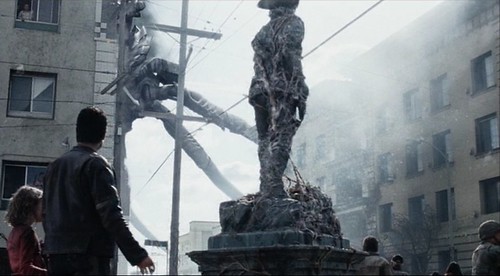
Criticizing the aliens for purposelessness and adhering to a monomaniacal rule that the aliens need recognizable motives misses the point. The aliens and their tripods are not an extraterrestrial threat so much as a metaphor of man's capacity for war; pure violence incarnate. Note that the alien tripods do not "land" from outer space but come up from beneath our cities and our homes, suggesting they have been with us all this time. Symbolically, they are not an external threat but represent the inner chaos and capacity for destruction that lies beneath a seemingly benign and civil facade. The "war" the title suggests is not a macroscopic fight between man and alien. Rather, it takes place, as Ebert said, on the molecular level; an internal "fight" between man's polarizing tendencies towards violence and nonviolence. The picture becomes a roadsign; cautioning us against reactionary violence and eye-for-an-eye. It’s not simply preaching anti-violence, but rather asking us to proceed with caution and ask ourselves where our responsibilities lay.

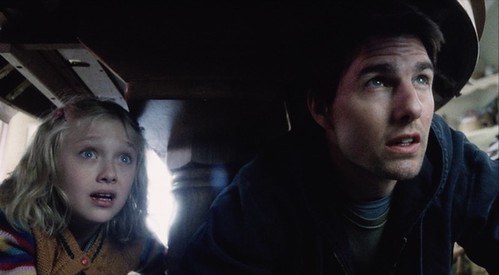
The pointlessness of the alien attacks is necessary for meaning and emphasizes the nonsensical, inexplicable consequences of violence. Ray Ferrier (Tom Cruise) finds himself at a loss for words. How does he explain to his children the horrors he's witnessed? How do you explain people not just being killed, but vaporized into ash all around you? To insist that such violence needs "purpose" borders reprehensibility. While I understand Ebert's complaint with respect to narrative, he inadvertently advocates violence in the process by trying to rationalize it. War is rarely so clear-cut. You often hear of veterans after the war, saying how nobody even remembers why it started. The same applies here. It becomes very easy to stray from the path we set out upon; to lose our sense of purpose and wander aimlessly into battle.

Spielberg is not making another Close Encounters of the Third Kind or E.T.: The Extraterrestrial, where aliens invoked genuine beauty and wonderment. In War of the Worlds, the aliens and their tripods are supposed to be ungainly. As avatars of violence, their grotesquery and instability make sense. War of the Worlds proposes the apocalypse, but its strength lies in balancing on the precipice between a life-affirming, yet cautious optimism, and a meaningless, nihilistic void. Violence can be overcome and it does have weaknesses. The movie offers us hope that chaos is not invincible and affirms the existence of harmony and humanism in the universe.

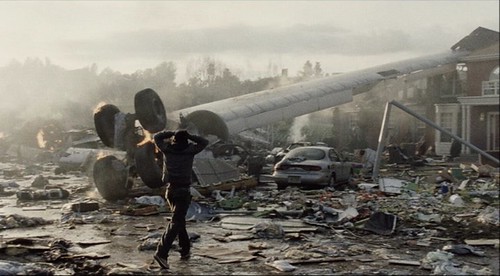
Somehow, War of the Worlds is criticized for a lack of emotion. This becomes difficult for me to understand because when I recently watched the movie again, I was struck by how poignant these images were, in part because they are tied to my own sense of nationalism. When Ray takes his kids to his ex-wife’s house and the plane hits, Spielberg is reenacting 9/11 on an expressionistic microcosm. Tragic events like these bring the child to the forefront. On one level, the urge to shield our children from the horrors of violence becomes an anchor; grounding us from the ensuing chaos. On another level, these events make us all like children; regarding violence with wide-eyed shock. Such concepts are hardly shallow, and how critics can ignore or belittle them is beyond me. These same critics go on to criticize the 9/11 allusions as exploitation. So contemporary issues are taboo for blockbusters? The mainstream picture can't be art? You can only deal with these issues in a literal sense? Preferably via "independent" filmmakers with shaky camera work? Is the allegory dying, or is it already dead?

war of the worlds 2

Critics who say the movie lacks emotion must have ice water in their veins. Not that they don't feel anything, but they resist and reject that emotional pull. 9/11 is unacceptable subject matter, not because of how it's handled, but because it makes us uncomfortable and blockbusters can't be serious. Yet War of the Worlds is not using 9/11 for cheap thrills, but as a springboard into discussing violence and our national atmosphere. It, along with Minority Report and Eastern Promises, present unique and sound approaches to violence in an age where death (and rape) become ever more casual in the movies and on TV. If it makes violence uncomfortable, it's doing its job. Those three movies handle violence effectively because they do not rely on increasing detail or raising body count. Minority Report is essentially a thesis on violence, setting up a hypothetical world where murder is virtually nonexistent. A death in Minority Report shocks us and resonates deeply, because the world of the movie has convinced us murder doesn't exist; lulling us into a sense of security. Eastern Promises, as I've written before, doesn't pile up a faceless body count. Each act of violence is tied to the dramatic and emotional arc of the picture. And War of the Worlds. The overwhelming loss of innocent human life is intensified by those 9/11 allusions. What would you rather have: a blockbuster that belittles human life for entertainment (Lord of the Rings), or one that presents violence that does disturb us?

war of the worlds 4

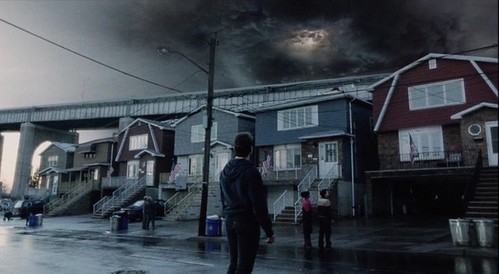
War of the Worlds is not a picture that relies on its narrative so much as the images it presents. Ray with his daughter, watching the storm brewing in the distance evokes our false sense of impunity before 9/11; the illusion that the US was invulnerable to attack. It’s not simply the attacks of 9/11, but the falling popularity of our subsequent actions. 9/11 was a slap in the face; a wakeup call that War of the Worlds captures magnificently. Other images, like Ray seeing people turn to ash all around him, his speechlessness afterwords, or his frustrations as he tries to fulfill his role as a parent are humanist at their heart. Ray is not looking for vengeance but to protect basic human values. These values are tested and their complexity is enriched when he needs to kill Harlan Ogilvy (Tim Robbins) in order to protect his daughter. War of the Worlds is not a black and white message movie offering simplistic morals to complex situations. If the movie has plausibility, it lies in its characters’ actions. These are believable reactions to a state of chaos and cover a vivified spectrum of human nature. There is a desire to seek vengeance, protect our children, stare in wide-eyed wonderment, clamor for our own safety, act with benevolence, or go mad.

war of the worlds 5

The mainstream picture is denied contemporary allusion whenever the critics feel like it. Not because of how it handles the material, but because of what it inherently is. It depends on who's in the movie and who directed or funded it. War of the Worlds is socially conscious and moralistically sound; its metaphor of violence is hardly outrageous or blameworthy. I don't even think it's a partisan picture. And somehow it receives more flak than subversive, politically biased, poorly constructed messes like Slumdog Millionaire or Avatar.

War of the Worlds is a movie that must be felt. Analyzing it shot-by-shot can be done, but such a method is reductive and runs the risk of losing the feel of the work. Rejecting a movie simply because it invokes our nationalist sentiments reeks of elitism; arbitrary rules are put in place dictating what gets put on the pedestal of Art and what's throwaway entertainment.

war of the worlds 6

"Are we still alive?"

-Rachel

Sunday, December 20, 2009

Decalogue I (1988)

Director: Krzysztof Kieslowski
Screenplay: Krzysztof Kieslowski and Krzysztof Piesiewicz
Starring: Henryk Baranowski, Wojciech Klata, and Maja Komorowska

Images from the 2003 Facets release of The Decalogue.

decalogue I 1

Think back to when you were at school and you solved a math problem or learned a new concept. Something where the pieces just “clicked,” and you got it. Everything seemed clear, fresh, and new, perhaps because we felt we understood the world and had a better grasp on it. A math equation seems so reassuring and straightforward. It tells us This equals That. It’s precise and definitive, giving us a simple solution to a problem.

Yet our command of math problems can make us confident and proud, to where this hubris can create absolute faith in a system. Our faith gives us a sense of superiority, as if we understand the world better than the non-believers. It feels good to have an answer and not just for math problems, but for life itself. It’s as if we’ve discovered the secret key to the eternal question: What does life mean?

In Decalogue I, Pavel is happy when he solves the math problem. He’s glad he has the answer and also that the problem came from his father, who he sees as a kind of god. The answer he finds is a number, which has a satisfying finality to it. That is the answer. Period. While numbers have closure, they can also be disappointing once we realize how limited they are. What does it matter if Pavel figures out when Ms. Piggy catches Kermit when he’s presented with something inexplicable like a dog’s death? For once, his father fails to provide a satisfying answer.

We all go through that phase when we think our parents have the answer to everything. The world seems safe and understandable, like a cocoon protecting us from reality. So when Pavel’s dad tells him that death is when the heart stops pumping blood, we stop moving, and we cease to exist, that cocoon is shattered. His answer has the finality of a number. Yet Pavel is not satisfied, because his aunt believes with the same conviction that there is an afterlife. The question is not: Who’s right? But rather: How can two people have opposing beliefs, yet absolute faith in them?

The father trusts his system of logic. Like the chess player using a system for the games she plays, he uses his computer to lock doors, turn the faucet on, and predict the weather. It’s a system he has absolute faith in, but one that isn’t perfect. His pride on it costs him his son. Yet how is his faith any different from a religious one?

The father trusts his numbers just as the aunt trusts in God. Ask any religious person: “How do you know God exists?” and the answer will probably be: “Because I have faith.” But what if they’re wrong? How can Christians, Muslims, Jews, Atheists, Buddhists, Hindus and every other belief all have the conviction that they are right? We can’t answer that with a satisfying conclusion, just as Krzysztof can’t give a satisfying answer about death, which leaves us in an existential quandary. Perhaps the problem lies in the question itself. Maybe everyone’s right. Maybe we should simply tolerate and respect a person’s beliefs. To each his own, you know what I mean?

But what if beliefs manifest themselves in the way we live? Which of course they do. Should I respect an occult society that sacrifices children on blood altars and dances with rattlesnakes just because it’s their faith? Or a more relevant question: How do you respect a Catholic’s belief against abortion if you are Pro-Choice? If you bend over for their beliefs, you are renouncing your own. We cooperate as best we can, but we’ll never agree on everything. So what should we do? Proclaim faith in God? Then which god? Islamic, Jewish, or Christian? If Christian, then should we believe in Catholicism, Mormonism, Evangelicalism, or any other denomination? See what I’m doing? I’m looking for a definitive answer, which I’m not sure is possible.

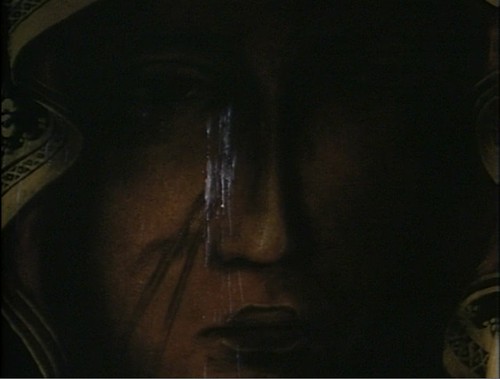
I must confess I’m stuck at the moment, trying to finish this up. I feel the need to conclude, but how? Maybe ruminate on a shot in Decalogue I? How about when we see the father enter the church frustrated and knock over the altar. Candle wax spills on a portrait of Mary, and she appears to cry. Is this an act of God? A sign? Or perhaps it’s coincidence? Or the eyeball-rolling (but nevertheless true) explanation: The filmmaker’s intention. I don’t think “fate” and “coincidence” are mutually exclusive. For me, they are two names for the same phenomenon. But I don’t think the name we give is as important as the phenomenon itself. We notice these things, and isn’t that the important part? They give us a measure of stability and meaning in a world of chaos. That we notice them at all blows my mind more than trying to figure out what caused them.

decalogue I 2

I guess in the end, we’re left with questions. What we have in us is the desire for answers, which raises more questions like: Why are we so keen on looking for solutions? Maybe it should be enough to simply accept this part of us and use our faiths as something to hold onto, like something that anchors our sanity and gives us hope.

Wednesday, October 14, 2009

Pan's Labyrinth (2006)

Spoilers.

Director: Guillermo del Toro
Screenplay: Guillermo del Toro
Starring: Sergei Lopez, Maribel Verdu, and Ivana Baquero.


Images from the 2007 New Line 2-disc Platinum Series.

Pan's Labyrinth 11

Pan's Labyrinth may be a movie I'm too close to, but as Jim Emerson has said (repeatedly): If a movie is worth talking about, then let's talk about it.

Why is it that I rank del Toro's movie so high? Is it sentimentality? Its place for me, personally, as a gateway into cinema that moves beyond the form of entertainment? In a way, I find these movies tougher (or perhaps more daunting) to talk about, but that shouldn't stop us. Citizen Kane seems to have fallen into an almost automatic place at the top of many people's lists of bests (or worsts). But if we like a movie, we have to like it for a reason. "Just cuz" doesn't cut it. So why is Pan's Labyrinth so special for me?

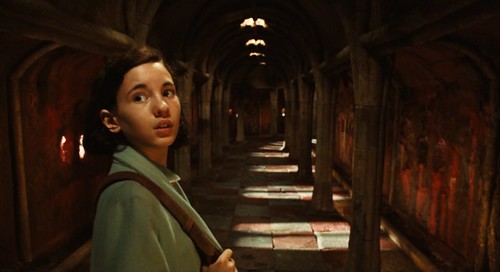
Movies are, at their heart, an acceptance of the screen's reality and departure from our own. Ultimately, though, our escape is still standing on the border between two worlds. As a movie lover, I am fascinated by that line: the division between our reality and another, which Pan's Labyrinth balances upon like a seasoned gymnast. Its interest is not plunging into the fantasy world but standing at the doorway separating the two realities. Pan's Labyrinth is many things tied together and rolled into one: A coming of age parable, fairy tale, rumination on escape from the horrors of reality, and an existential dichotomy of physicality and transcendence.

Pan's Labyrinth 1

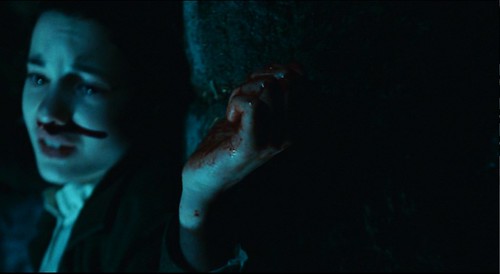
From the very first shot, we can already see a focus on a transitional state; one of transcendence between two concepts. The camera pans across darkness to cinematically reverse Ofelia’s later death, and then shows her ascending from the underworld into our own. The film uses the screen to reciprocate birth and death; events bookending lives and heralding the arrival and departure from a world of suffering. Indeed, the film carries with it spiritual currents in tune with Buddhism or Christ’s teachings that acknowledge and shed light upon the suffering inherent to life and the burden of physicality. It’s the level of existentialism found in The Seventh Seal, although its ultimate prospect isn’t as grim.

I've heard two criticisms of the movie, neither of which I feel address any significant flaw in the picture. The first is the characters' simplicity; the idea being they haven't been "fleshed out" enough but remain archetypal. The problem with this line of reasoning lies in applying judgment for one type of movie to another and assuming these criteria are universal. Fantasy, and more specifically a fairy tale, necessarily simplifies its characters into archetypes. It's as fundamental to the genre as breaking out into song is for musicals. A problem with the characters not being "John Cassavetes characters" (to use del Toro's phrasing) is a problem with the entire genre and not the execution of making the film.

The other criticism is that not enough time is spent in the fantasy world. Yes, we are left craving more of the movie's visual delights, but to depart from reality any more would compromise the picture thematically. Again, this has to do, in part, with understanding the role of fairy tales. To view fantasy solely as a means of escape is to miss the point. Rather, the genre is a way of confronting and clarifying ideas and issues in the real world. By extension, this is what any type of fiction generally seeks to do: to hold the looking glass up to the world.

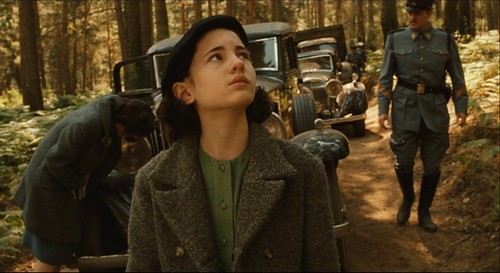
If you know your fairy tales, you know many of them are really coming of age stories that allegorize adolescence into narratives, often involving curses, princes, princesses, and sexual repression. Ultimately, what many of these have in common is a progression from naiveté to a greater awareness of adulthood. This is growth that Ofelia undergoes in Pan’s Labyrinth. Early on, she’s blithely ignorant of her mother’s pains; distracted by her imagination and books while her mother staggers from the burden of pregnancy.

Pan's Labyrinth 10

Children view the world through a simplified lens that is simultaneously a gift and a limitation. Their blissful ignorance leaves them hermetically insulated from experiencing complex feelings of pain and anguish, but also incapable of empathy beyond simplified emotion. Ofelia understands her mother is lonely, but cannot distinguish physical and adult loneliness, or mother-daughter love vs. adult love. Her mother tells her she’ll understand when she’s older.

Ofelia is Princess Moanna in the Underworld. Yet in her Earth life, her mother treats her as a princess too, and dotes upon her with dresses and patent leather shoes. In this sense, her cinematic death could be read as marking a spiritual death of the childhood self (princess). The film, therefore, serves as a “cutting out” of the princess. Consider, too, the scene where Mercedes is milking the cow and tells Ofelia to be careful because “we can’t have you getting milk on your new dress.” Indeed, the Ofelia of the movie does not enter nubility and remains a princess. Her maturation over the film’s course is not one of sexuality, but of a different kind.

Just as there isn’t one type of love, maturity isn’t simply defined by a person’s chronological progression into adulthood. Beyond physical development is mental and spiritual maturation, which is the focus of Pan’s Labyrinth. It isn’t necessarily determined by age, but occurs as a result of compassion being born within us. Perhaps Ofelia’s transcendence to the Underworld not only marks the removal of the physical child, but also heralds spiritual wisdom and understanding that the common denominator is our mortality in the corporeal world.

Pan's Labyrinth 12

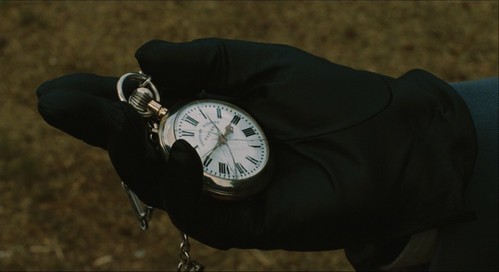
Ofelia and Captain Vidal value life, but that is where their commonality ends. The difference lies in why. Captain Vidal is archetypal, but the movie isn't a character study and that shouldn't be seen as a fault. Rather, Vidal comes to represent a side of humanity; one that values life not as an end to itself, but out of fear towards the alternative. Vidal's character is structured around actions and habits focusing on worldly, material concerns. The first time we see him, he's staring at his pocket watch with a Quentin-esque gaze a la The Sound and the Fury; a motif that's repeated over and over. The watch represents the one white elephant he can't dispose of or wield. His "bienvenidos" to Carmen is really by proxy: his physical actions revealing a concern only for his son, which is the closest he can get to immortality.

Pan's Labyrinth 2

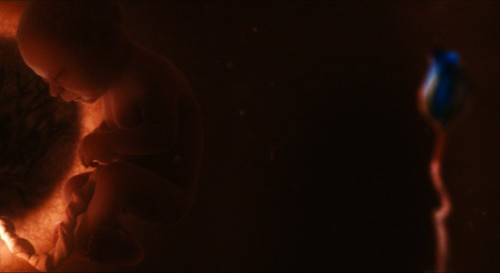
I don't think del Toro is calling Captain Vidal a villain so much as an attribute of humanity that we deny out of shame, but must ultimately accept in its presence, to whatever degree, within ourselves. Life, for Vidal, is merely the alternative to death and as such is not valued for the sake of life alone. Consider the story that Ofelia tells to her mother’s womb of the rose atop a mountain surrounded by venomous thorns. The rose brings the promise of immortality, but:

“Men talked amongst themselves about their fear of death, and pain, but never about the promise of eternal life.”

This story overlaps with Vidal cleaning his pocket watch. When I first saw Pan’s Labyrinth, I made the connection that he was a man who did strive for the rose of immortality. Yet this would elevate him, and I don’t think that’s the point. There is too much commonality between Vidal and our own material concerns. What the rose suggests is not immortality in the physical realm, but the spiritual one. Del Toro is arguing for the eternal existence of the soul, but only if we allow ourselves to see that. The story regards “men” generally, meaning those of us who treasure life out of fear from death. This is something all of us face to some extent and Vidal is emblematic of that fear.

Pan's Labyrinth 3

His obvious concern for his son cannot be disregarded if we face that thought ourselves. Hackneyed ideas are what they are because we continue to dismiss them as such. If we fear death, then let us acknowledge that. With our children lies the hope that some part of us will remain once we’ve left. Yet the narrow view through which Vidal sees this isn’t sufficient to grant us immortality or even a legacy, del Toro is arguing. What does blood even mean as an end to itself? Ofelia takes after Doctor Ferreiro and Mercedes more than Vidal or even her own mother. The movie talks of family that transcends and subverts the blood-axiom.

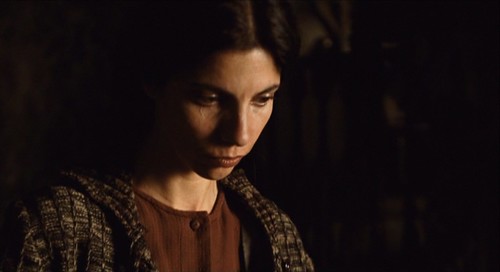
Consider Mercedes, too. Upon hearing one of the rebels has been captured, her thoughts turn immediately to her brother, Pedro. Yet it isn’t with relief that she reacts to learning it was instead the stuttering rebel. She’s still affected because she realizes that the prisoner is still her brother, if not by blood. The image of Mercedes, lost in thought and chopping potatoes, isn’t one of fear that she’ll be ratted out. It’s one of compassion and sorrow for a brother in spirit. Yet her strength lies in noticing that incorporeal idea. Her strengths (in spirit) and weaknesses (in physical being and location) are reciprocal to Vidal’s.

Pan's Labyrinth 8

Women are strong. We’ve been down this road a lot. Much of the time, this is emphasized by their ability to give birth where men cannot. Yet that is only the starting point. Carmen and Mercedes come to form two types of mother figures to Ofelia. One by blood, and the other by adoption (in spirit). Carmen displays the woman’s traditionally held power: pregnancy. But del Toro isn’t really focusing on that strength per se. What the film does is elaborate this idea beyond the physical. Mercedes carries her knife hidden against her abdomen. Where Carmen wields the ability to give birth, Mercedes holds the ability to subvert the expectations given to women. Vidal’s thinking is limited to these conventions and that ultimately proves his downfall.

I’d also point to the chalk. When Vidal picks it up, it breaks. He lacks the mindset to wield that key into understanding spirituality and transcendence. The movie uses the fairy tale as an allegory for reality, something that Vidal could never comprehend (I doubt he’d watch movies very much). The tasks Ofelia performs are somehow connected to something she, or someone parallel to her, must overcome in real life.

Pan's Labyrinth 7

The fig tree is a source of bounty and fertility, yet the monstrous Toad has festered its roots. The tree, and more specifically the entrance, is a maternal image and parallels Ofelia’s mother. The introduction of the toad, of course, is Vidal. Ofelia tricks the toad into eating the stones to obtain the key. Similarly, Mercedes uses Vidal’s own pride and underestimation of women against him, evident in the store room key. Ofelia’s ingenuity also foreshadows her spiking Vidal’s drink with the sleeping medicine; combining something tempting with something deadly. The ultimate idea of this task is that Ofelia confronts her fear and gains independence.

The Pale Man sequence holds another key to understanding del Toro’s message. Namely, it is the idea of choice, regardless of benevolence. I’ll point to the strong parallels between Vidal and the Pale Man: both pose a significant obstacle to Ofelia/Mercedes/Doctor Ferreiro, both hoard a mountain of food in their abode tempting their enemies, and finally, they are both defined by their physical action. The Pale Man is the fantasy surrogate for Vidal, his eyes and perception literally and figuratively indivisible from his actions (his palms, in this case). Anything he sees is an action, and any action he takes necessarily guides his sight. In other words, his sight is confined to his physicality and he is incapable of transcending his body. Notice, too, that the Pale Man is stuck in his realm, whereas Ofelia is able to pass freely from one to another.

Pan's Labyrinth 5

The Pale Man scene also plays out like Eden. Yet del Toro’s take on this isn’t one of reprimand, but one of acceptance as a necessary trait defining humanity. Utopia is not a place of growth and learning, del Toro is saying. Casting out of Eden was a necessary step in humanity’s coming of age. Ofelia needs to defy the Faun’s instructions because it is her choice. Limiting our free will limits our spiritual maturity, which is the distinction the movie is making from sexual maturity.

Pan’s Labyrinth is ultimately a movie arguing for spirituality. Regardless of whether you’re religious or not, spirituality can still exist as a belief. It involves moving beyond physical appearance to read between the lines. Whether this manifests itself as God, Allah, or whatever misses the point. Rather, it is the idea that we are not limited by our bodies.

“It is only in His physical absence that the place He occupies in our souls is reaffirmed.”

Pan's Labyrinth 9


Monday, September 7, 2009

Blade Runner (1982)

Spoilers.

Director: Ridley Scott
Screenplay: David Peoples
Starring: Harrison Ford, Sean Young, and Rutger Hauer

Images from the 2007 Warner Home Video 4-disc Collector's Edition.

Films are very much products of their time, whether unconsciously echoing that era’s beliefs or values, or actively rejecting those customs. The 80s, rife with morbid, self-centered materialism saw many films revel in that excess, although the decade also gave birth to the likes of Blue Velvet, Videodrome, Brazil, Time Bandits, and Blade Runner; films that openly defied bureaucratic, consumerist, and suburban values. Of these, perhaps none has held up a more serious lens to its subject than Blade Runner. The rest are all, to varying degrees, mired in dark, dark satire. Blade Runner, by comparison, is coldly melancholy, with its noir roots asking us what defines humanity while incisively examining rampant capitalism. With the 2007 Final Cut, Ridley Scott lent to the film an even darker, less certain prospect by the end, which is a fitting reaction to materialism that only seems to have grown since the 80s.     

Blade Runner 3

The glow of a Coca-Cola advertisement hovers over a futuristic L.A., divided into sleek skyscrapers and a crumbling underbelly. The city seems to be growing in on itself, threatening to collapse under its own weight. The capitalist mentality is rooted in the idea that we are better off with what’s being shoved into our eyes. Today, everything has a sponsor. Sports, television, and even film are no longer havens from the proliferation of product placement. Michael Bay, notorious for his own morbid product mongering, deserves a little credit for recognizing the aesthetic that goes into a commercial, even if his films lack any sizable merit. Billboards in Blade Runner rise above the tangled urban sprawl like beacons, enticing with promises of better, cleaner worlds. The film focuses on the dregs of its futuristic society, unconcerned with those privileged that migrate to new homes. The great unwashed get thrown in the garbage pile along with, ironically, the leftovers from yesterday’s consumerist orgy. 2008’s Wall-E would attempt a successful (if dramatically uneven) indictment of capitalism just as Blade Runner did.   

The world of Blade Runner is divided into the backwater alleys of societal dregs and the metropolitan elite (Tyrell) hovering, like the billboards, as gods ruling the rest from their unfathomably colossal monoliths. We live in a world of manufactured excess. All around us, with a few exceptions, are items that have undergone some production process, or at the very least, have had a price tag attached to them. We are ruled by capitalism, and those precious few things that we once thought were unsellable are worming their way into the global market. This is not to say everything has gone downhill. Slavery is no longer what it once was, but there is still class division that suffuses us with prejudice, and there are horror stories of modern day sex slave markets. So whatever progress we make feels like taking one step forward and a half step back. Blade Runner blurs this line even further by having mankind attempt to systematically terminate the humanity that their slave Replicants have come to evolve to.  

Science fiction has a perpetual fascination with what defines humanity that is rooted in reductionism. The idea of an artificial, man-made being that evolves to increasingly human characteristics is such a provocative one that the re-imagined Battlestar Galactica borrows from, and eventually elaborates upon, the core concept that Blade Runner puts forth. If we can essentially manufacture ethos; that is, forge an identity a la Frankenstein in the laboratory using tangible ingredients, then what makes us human?   

Blade Runner 2

Blade Runner takes this a step further. Mankind is easily frightened by things that we don’t understand or that threaten our identity. We know our existence, as Descartes (and Pris) said: “I think, therefore I am.” We can’t offer explanations as to why we exist or why we’re human but it is like some unquestionable axiom. That’s just the way it is. With Blade Runner, we are presented with Replicants that begin developing their own emotions. This scares us. It’s okay that they are physically stronger than us because we built them that way. But emotions (and I mean complex ones rather than simply fear, or hunger, or lust) are something we identify with, and having our own creations asserting their individuality is something that mankind cannot accept. We have no way of knowing if it’s simply excellent software, but that doesn’t prevent us from empathizing. Rachael is different among Replicants because in addition to emotions, she has memories with which to anchor them. Deckard ultimately accepts her as a conscience being with real emotions. He could or could not be a Replicant. For me, it is more philosophically interesting if he’s a human. Calling him a Replicant seems to simplify, or at least rationalize, Deckard and Rachael’s love, whereas a human-Replicant relation suggests deeper, more ambiguous complexities to our emotions.   

Blade Runner 5

What Blade Runner posits by mixing the division between human and Replicant identity leads to an interesting exercise in empathy as we observe humans during the film. The common observation/complaint I hear about the movie is that the characters are difficult to sympathize with. To put it simply, I believe that’s the point of the film. It is certainly necessary for Blade Runner’s ability to blur the categorical lines we mentally form about human identity. The implications posed if Replicants are indeed developing genuine emotions can be astounding. If we accept that Replicants do feel emotional pain and pleasure no different from our own and if we accept that emotional complexities imply a conscience being, then what does this say about our desire to stamp out these entities like an experiment gone awry? Furthermore, how foolproof is the Voight-Kampff test and can we really reduce emotion to an analysis of questions, answers, and pupil dilations? Certainly, there have been people to fool a polygraph that we’re certain are humans.   

Blade Runner 1

One intriguing motif is the focus on eyes. The Voight-Kampff test examines the pupil’s contractions like a pulse, or like peering into the window of a being’s soul. If you’ve taken general anatomy, you’d learn that the only living surface tissue is from the eyes. The 30 or so layers of skin cells we see are in fact dead. Similarly, eyes offer us something intrinsically insightful to understanding our subject. Present us with a shady person covering his eyes, or someone with dark sunglasses, and we form a preconceived notion of their accessibility in the back of our minds. This focus on eyes brings to my mind the camera lens itself, garnering the film with a self-examination of sorts. To an extent, the act of filming is something of a mirror image to the Voight-Kampff test. Rather than examine existing emotions, film instead (often artificially) produces emotions, often in settings that couldn’t be further from intimate (a common complaint about film acting, I hear, is how impersonal and haphazard it seems compared to say, the stage).   

The film distances us from the humans, and other than knowing that the Replicants aren’t human, the playing field is leveled. My own sympathies lie closer to the Replicants, partly because it is not their choice to exist as they want. They have been born into slavery to the point where they are no longer treated as humans but mechanical beings that have developed emotions as if by downloading software. Mankind has built them with a specific function: manual labor, assassination, pleasure, or military services. I am reminded of a Simpsons episode where Bart and Lisa are at military school, and their CO tells them that in the future, wars will not be fought between humans, but between robots and preferably in space. Yet this prospect is being fulfilled right now. Today, pilots are able to fly remote bombers from the comfort of their own home and drop several megatons of ordnance with the push of a button. The disconnect has risen, and killing almost becomes a virtual act. Blade Runner has taken this idea one step further by incorporating the weapons with a conscience. Prostitution, too, is a common point of attack on capitalism, the idea being that selling yourself is something of a violation of our dignity. There have certainly been a few masterpieces on the subject. The reference to Pris as a “basic pleasure model” is said with such casualty, it again suggests a disconnect with what should be a touchy subject. The Replicants are not so much prostitutes as they are sex slaves, and it is disturbing how such a thing can be accepted just because they aren’t considered human. Are they lesser even than animals?   

Blade Runner 7

I said earlier that I sympathize with Replicants because it is not their choice to exist. I realize a potential hole in this argument, since we too, have not chosen to exist, but were borne into this world by our parents’ choice (or accident). In Blade Runner, there is the idea of Man playing God, so to speak. I am not religious, but I’m not adverse to the ideas and implications thereof. Tyrell is like God, creating Replicants in his own image. He is constantly tinkering with his design, attempting to perfect not merely form or emotion, but the act of creation itself. If you accept the auteur theory to any degree, than Ridley Scott, too, is the God of his film, constantly improving his creation through modification. Tyrell, seemingly safe in his obsidian, Mayan-like pyramid, is something of a father figure to Roy Batty, who is obviously supposed to be Christ. In a sense, Blade Runner accomplishes what The Last Temptation of Christ did: give its Christ a human face and allow us to empathize with what is possibly the most mythological figure in history. Roy is born into the world with a destiny, so to speak. He is confused and grappling with his own existence because of his new-found emotion. By the end, we even see him drive a nail through his palm, ultimately accepting his fate and sparing Deckard. Perhaps this is another rationalization for having Deckard as a human: He serves as an allegory for those that Christ sacrificed himself to save. The end of the film offers a measure of hope, even if the Final Cut wisely removes that incongruous ending of the original.   

Why does Roy save Deckard? I don’t believe it’s because he’s a Replicant, as this seems to simplify Roy’s actions. The film does depart from a straight Christian parable, partly because Christ didn’t drag humanity through the mud only to save them in the end. I think part of it has to do with empathy. Roy is essentially near death, like being cursed with a terminal disease out of his control. By having Deckard not only being helpless, but also dependent on Roy, he is turning the tables and switching roles with the blade runner and making him see what it is like to be so close to death. Roy accepts his fate, but this final act is a way of putting Deckard in his shoes, in the hopes of making him (and mankind) see his existential dilemma.   

Christ didn’t kill God as Roy kills Tyrell either. The lead up to that scene, with J.F. Sebastian, plays like something of an uprising from the lower class. Roy is leveling the social playing field, which has so often given the upper classes, well... the upper hand. As Roy and Sebastian physically rise to Tyrell’s level, they are rising up to socially meet him face to face, symbolized by the chess game. Sebastian is a societal reject, having to build his own friends and is essentially treated as a child (he does, after all, appear to be the oldest person ever with Methuselah Syndrome; and children, too, create their own friends). He is something of a poster child for the lower class. But wait a minute... Roy kills both of them! It can’t be because he’s scared of having a witness. Rather, I think the act of killing Tyrell and Sebastian represents a kind of social purging. If you want another biblical allegory, perhaps it is akin to the Noachian flood. He is killing off the class structure and through Deckard, removing humanity’s prejudice.    
Blade Runner 8

Blade Runner, admittedly, isn’t the easiest film to watch. There’s so much going on in the frame that it takes multiple viewings just to sort out who everyone is and to penetrate their character’s superficial inaccessibility. I have only seen the original 1982 cut and the 2007 Final Cut. The voice over of the original, interesting for what it is (and because it adds to the noirish feel), is wisely removed from the 2007 cut. I don’t have a strong desire to watch the other versions, and I do think the Final Cut works well, but I’ll try and get to them eventually. Regardless, Blade Runner is a fascinating, monumental achievement that is deeply rooted in a kind of 80s counterculture.